The Passing of Ira “Babe” Hanford and the story of the 1936 Triple Crown season

26 11 2009

Ira

I have to be honest, I completely missed this story when it first broke on Bloodhorse on Tuesday.  In fact, I’ll further confess that until now, I wasn’t very familiar with the career of Ira Babe Hanford, or the story of the 1936 Triple Crown season, apart from having seen the horse Bold Venture on the listings of previous Derby winners, and on the backs of commemorative Preakness and Derby glasses.

My awareness of Babe’s passing, and subsequent research into the story of the 1936 Derby, were sparked by a telephone conversation with, of all people, my parents on Thanksgiving morning.  My father having read that a jockey of historical significance had passed became somewhat astounded that I was not aware of either the story or the man in question.

Thirsting for more knowledge, and being somewhat embarrassed at the level of my own ignorance, I decided to do what anyone should do when they find a serious deficiency in their knowledge of a given subject; do a little digging and see what I could learn.

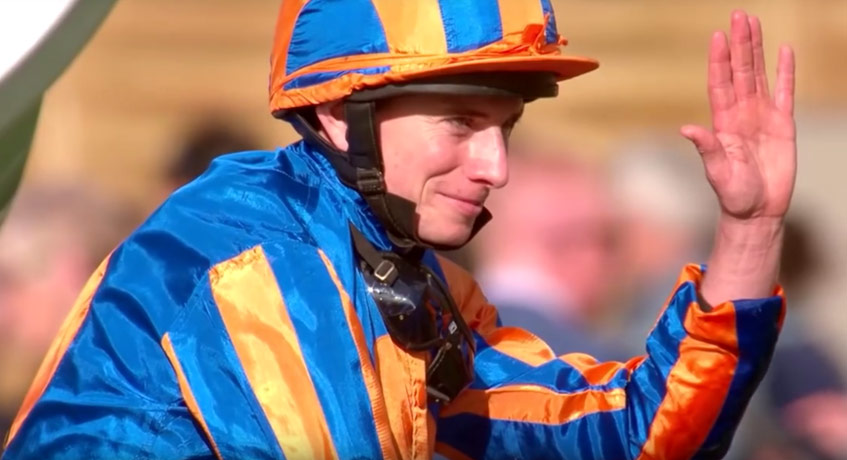
The story of Babe Hanford and the 1936 Derby is really rather interesting.  Babe rode Bold Venture, a 20/1 longshot, to victory that Saturday, but was then suspended and not aboard for the Preakness.

The ’36 Derby itself was viewed as something of a debacle, since the favorite, Brevity, was knocked down coming out of the gate.  Another strong contender, Granville, who would play a major role in horse racing throughout ’36, tossed his rider at the start of the race.   Bold Venture was also knocked around at the start, but managed to right the ship and come home on top.  As if all of that weren’t enough, yet another contender, Santa Anita Derby winner He Did, purportedly had the whip taken from the hands of jockey Charles Kurtsinger by a fan along the rail and finished out of the money (7th).

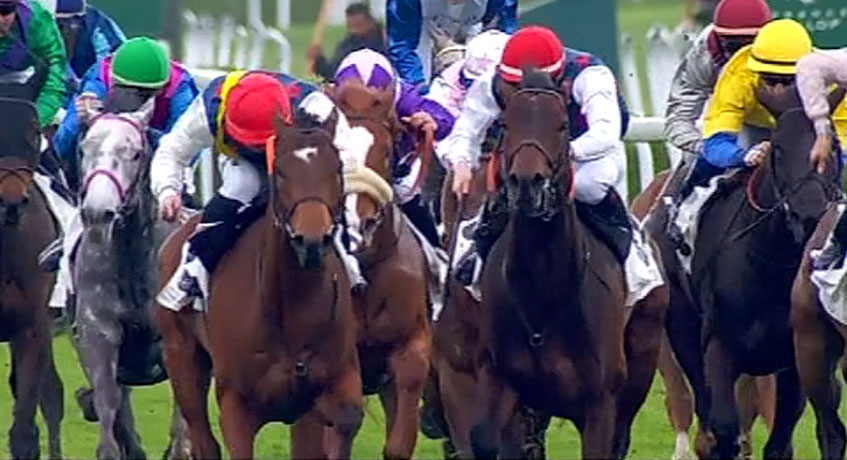
Here’s a clip of that 1936 Kentucky Derby.  You’ll forgive the audio/video quality as it is from a different era.  In this clip, it’s tough to see any of the aforementioned trouble clearly, but you can make out Bold Venture making his move about midway through the backstretch (roughly 1:15 on the video below).  He holds that lead into the turn and then holds on through a relentless stretch drive.

Following that Derby victory, Babe Hanford was suspended and not allowed to pilot Bold Venture in the ’36 Preakness.  Instead, the mount went to none other than George Woolf.  Yes, that George Woolf, the same one that would ride Seabiscuit following jockey Red Pollard’s career threatening injuries, and who would be immortalized on the silver screen by Gary Stevens in the film Seabiscuit.

Woolf would guide Bold Venture through a markedly different trip than his Kentucky Derby had been, coming from well off the pace, swinging wide on the turn and then locking horns in the stretch with Granville.  The two hit the wire in a photo finish that ultimately went to Bold Venture.

I can’t find a youtube clip available, but the replay for the ’36 Preakness can be viewed here, if interested.

Following the Preakness, Bold Venture was discovered to have had a tendon problem, and was promptly retired.  His foe in the Preakness, Granville, would wind up winning the 1936 Belmont by a nose over Mr. Bones, a race that still ranks among the top 3 closest finishes in Belmont Stakes history (along with Jaipur over Admiral’s Voyage in ’62 and Victory Gallop over Real Quiet in ’98).  Despite having lost both the Kentucky Derby and Preakness to Bold Venture, Granville would ultimately go on to become the 1936 Horse of the Year.

The next year, 1937, a well bred 3-year-old colt named War Admiral would win the Triple Crown, setting the stage for what would ultimately become the greatest match race in horse racing history in 1938 at Pimlico between War Admiral and Seabiscuit.  We all know how that one ended.

Getting back to Babe Hanford for a moment, it’s interesting to note that his older brother Buddy was actually killed while racing at Pimlico in 1935.  His younger brother, Carl, who also became a jockey, would go on to train the great Kelso.  Kelso ranks 4th in the Blood-Horse magazine top 100 list of U.S. thoroughbred champions, behind only Secretariat, Man O’ War, and Citation for the entire 20th century.

In an ironic twist of fate, Babe’s replacement aboard Bold Venture, the famed George Woolf, would (like Babe’s brother Buddy) die following racing related injuries in a 1946 race at Santa Anita.

Babe was the first apprentice rider in the history of the Kentucky Derby to have prevailed.  He was 91 years old when he passed on Saturday.

As for Bold Venture?  He went on to sire Assault, who in 1946 became just the 7th horse in history to win the Triple Crown.  He also sired Middleground, who in 1950 would win both the Kentucky Derby and the Belmont.   That’s five Triple Crown jewels between two offspring, not too shabby.

Not a bad story, eh?  Someone should write the Hollywood script for this tale of man and beast.

Oh what a tangled web we weave, don’t we?

Rest in peace, “Babe.”


Actions

Information

6 responses

27 11 2009
nancy

Nice write-up Kevin. I was in the same boat you were in regarding my lack of knowledge about the Babe and Bold Venture. Agree, sounds like a great book and movie. How bout giving it a shot!

27 11 2009
Kevin Stafford

Awe, you are too kind. Perhaps one day when I have enough free time. Oh, who am I kidding, when will I ever be enough free time?

Glad you enjoyed the post. :-)

28 11 2009
Lou Hildebrandt, Jr.

Nice write-up. I spoke with “Babe” a couple years ago when his brother, Carl, was about to be inducted into the Hall of Fame (I attended).

Didn’t really know him well, though he and his wife, Ginny and brother Carl bounced me on their knees at Fort Robinson, NE, where they were stationed with my dad, Lou Hildebrandt, now 91, and also a 30′s and 40′s contract rider for Sanford Stud Farm.

Both Babe and Carl are in my dad’s memoir “Riders Up” which I helped put together. The stories of the good old days are incredible, yet quite true. A different, yet, in some ways, a better time, according to those who experienced the era,

Sadly, “old soldiers DO die”. He will be missed.

29 11 2009
Kevin Stafford

Thanks for sharing, Lou – that’s a remarkable story! I’ll be checking out the memoir right away now. Must’ve been fascinating to see the game in it’s glory days.

29 11 2009
Brian Appleton

Great Kevin! The ’36 Triple Crown was a great story, I forgot all about it. As a note of interest did you know that Granville was Seabiscuit’s stable mate at one time when they were both being trained by “Sunny” Jim Fitzsimmons as two and three year olds? I love the connections that can always be found in horse racing.
Love Lou Hildebrandt’s story!

3 05 2010
Jillian

Babe was my uncle and I am very proud to have him be apart of my family history. I held a Derby party this past weekend and had his story, as well as my Uncle Carls, printed out and framed for all to see. I even got to talk with Carl before the race and asked for his advice on the horses. This is a great piece, so thank you for writing it. And if you ever do feel like writing a book or making a movie, let me know. I “know” so of the characters.

Leave a comment